
How it’s made
How wood and resin furniture is made.
From tree to furniture: choosing the slab, drying, casting the resin, sanding, lacquering and installing it in your home.
- Origin
- Forests of Bosnia and Herzegovina
- Wood
- Solid local hardwood
- Selected for
- Natural figure and live edge
- Made as
- A made-to-measure dining table
-
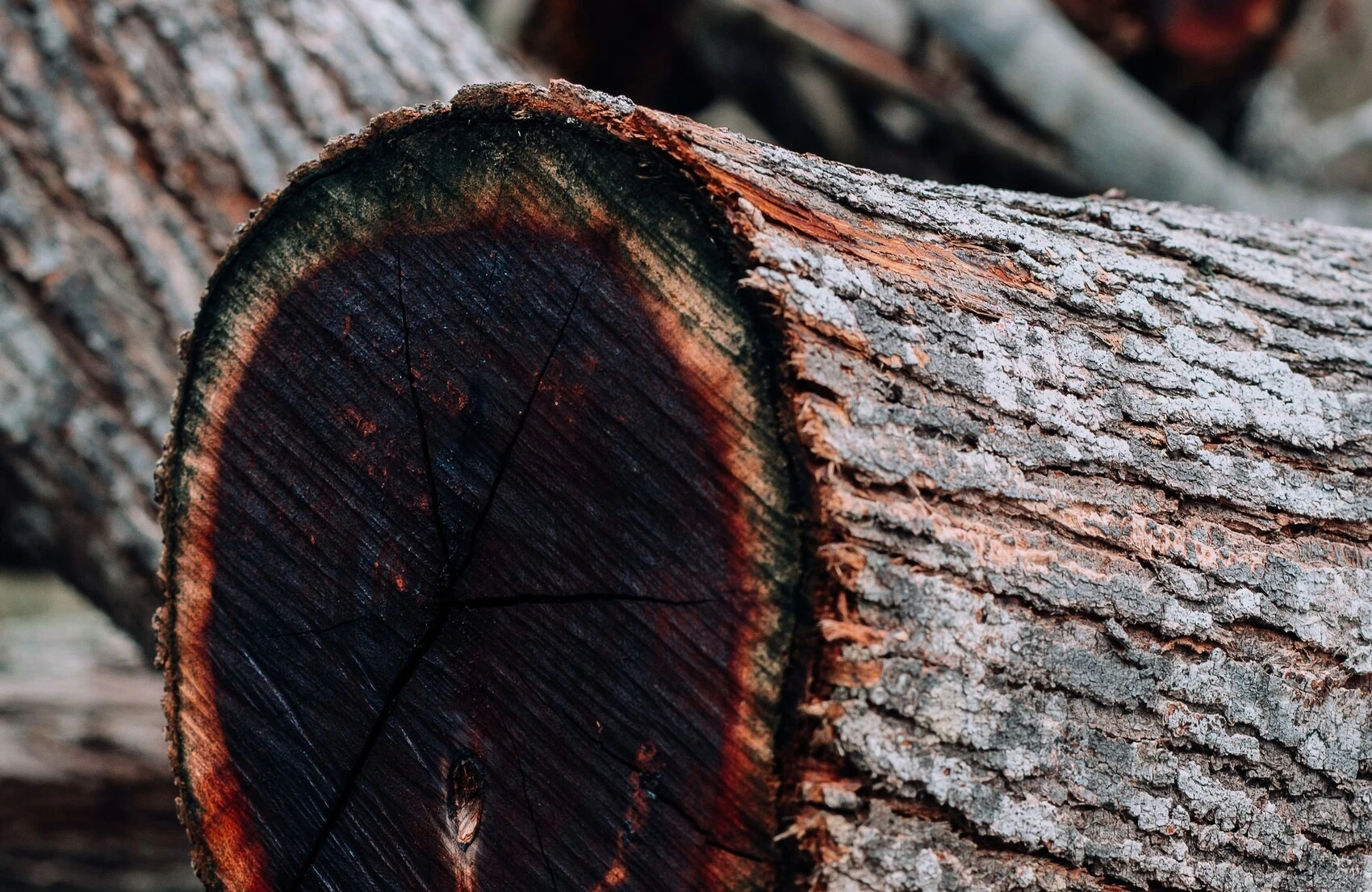 I
IThe tree
Each trunk records the conditions in which it grew. That history appears in the density, colour and direction of the grain, giving every finished table a different starting point.
-
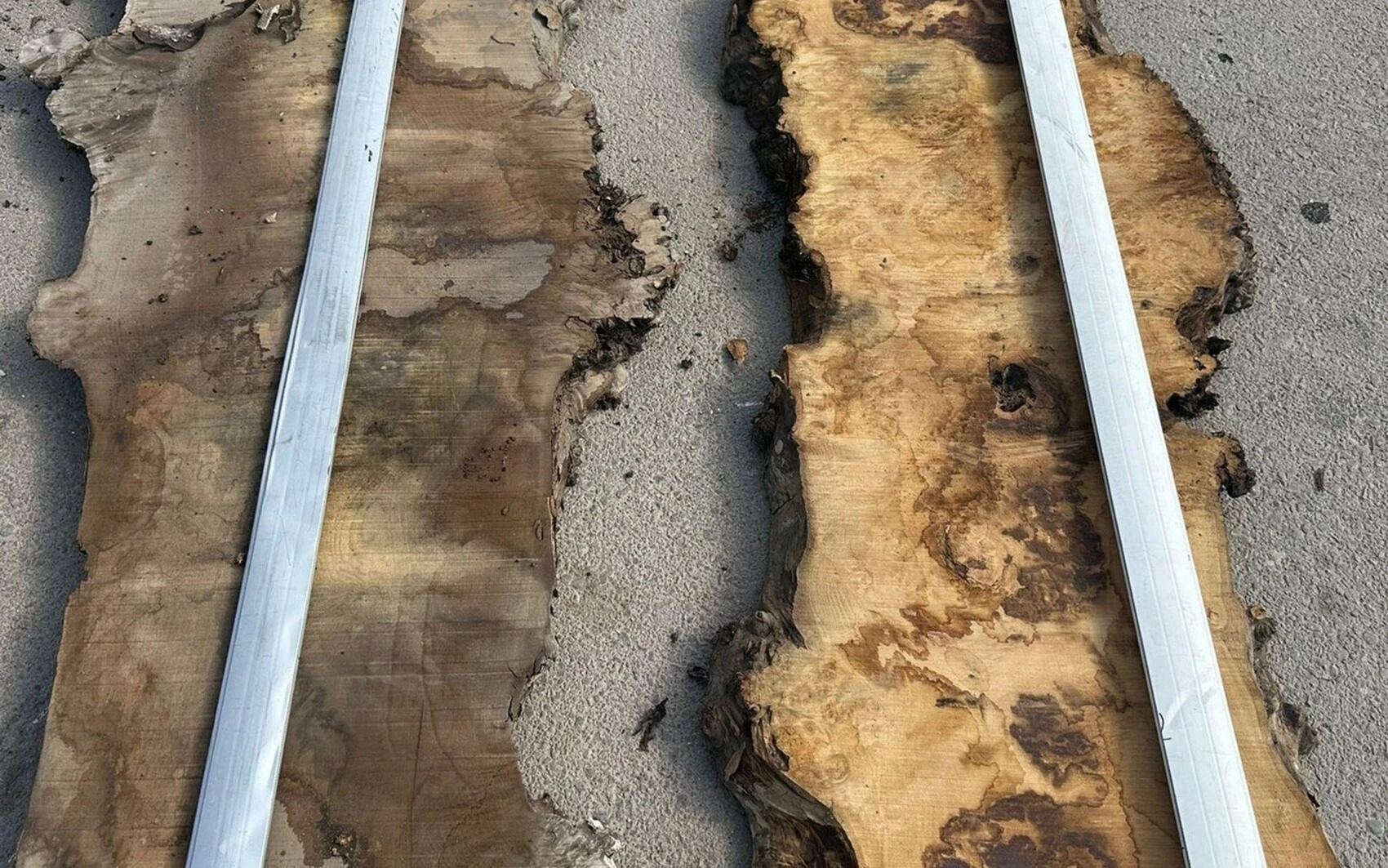 II
IIOpening the log
The first cut reveals the figure, natural cavities and darker mineral streaks. We study what is inside before deciding how the slab should be used.
-
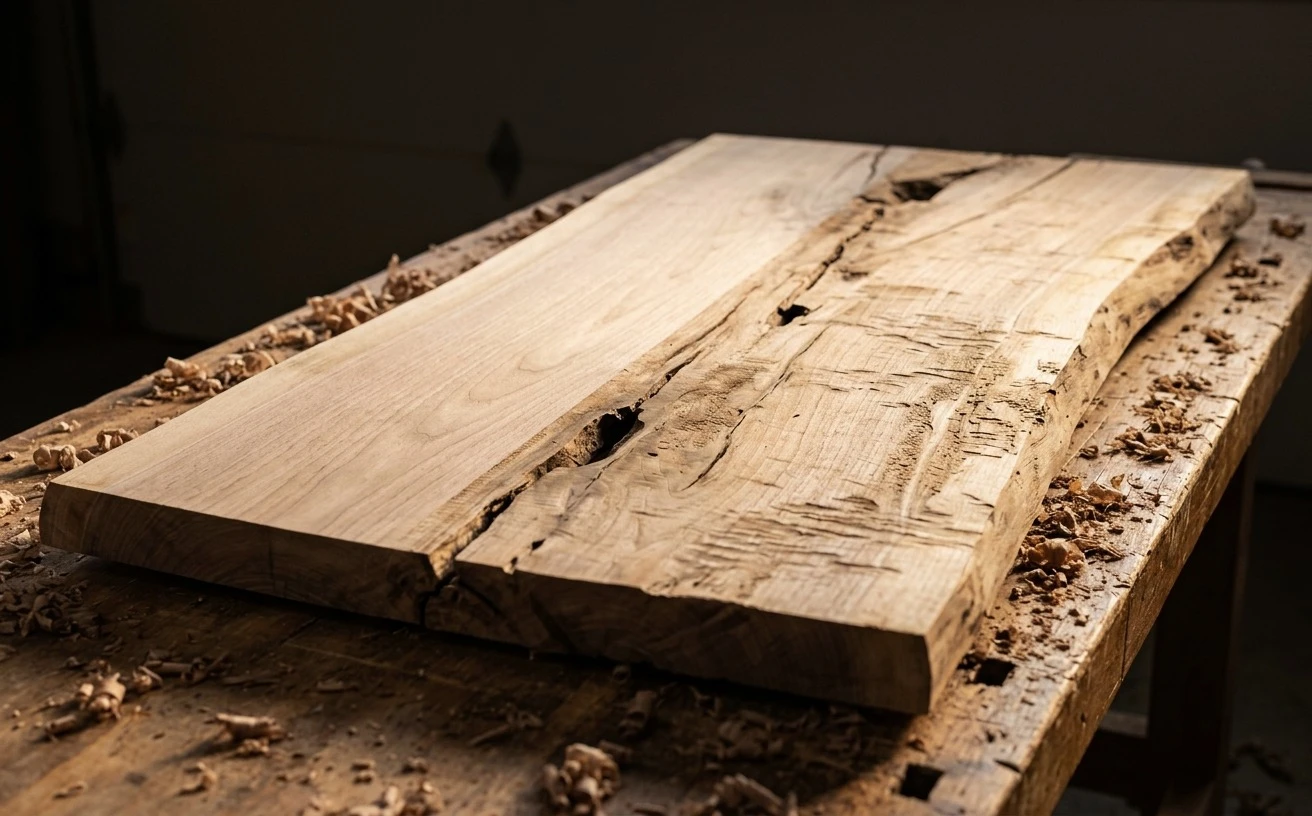 III
IIISeasoning the wood
The timber is dried slowly with air moving across every surface. Timing depends on species and thickness; patience here is what gives the finished table long-term stability.
-
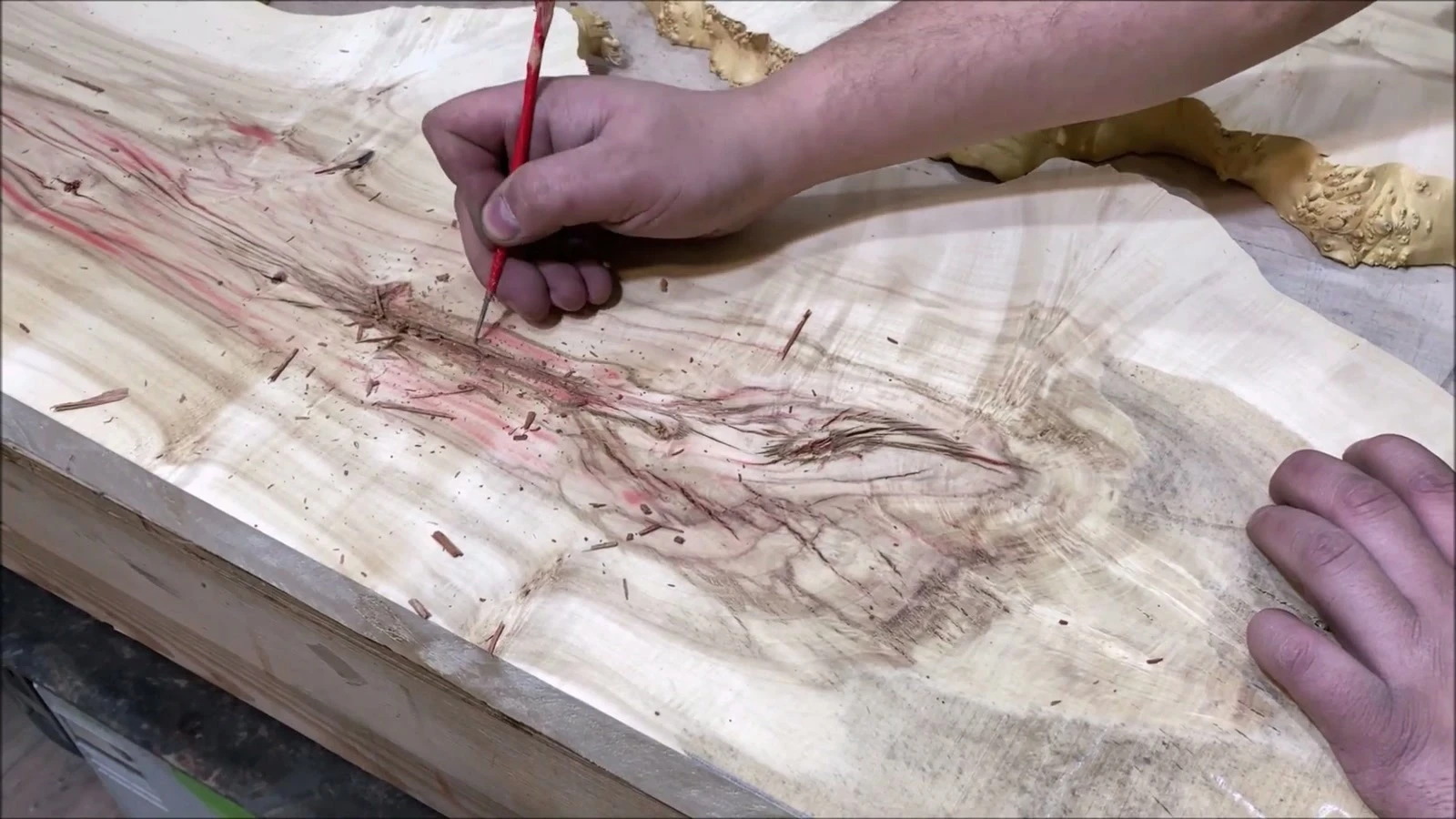 IV
IVDeciding what stays
We mark cracks, measure cavities and assess the direction of the grain. Sound natural features can become part of the design. Unstable sections are removed before work continues.
-
 V
VFlattening it
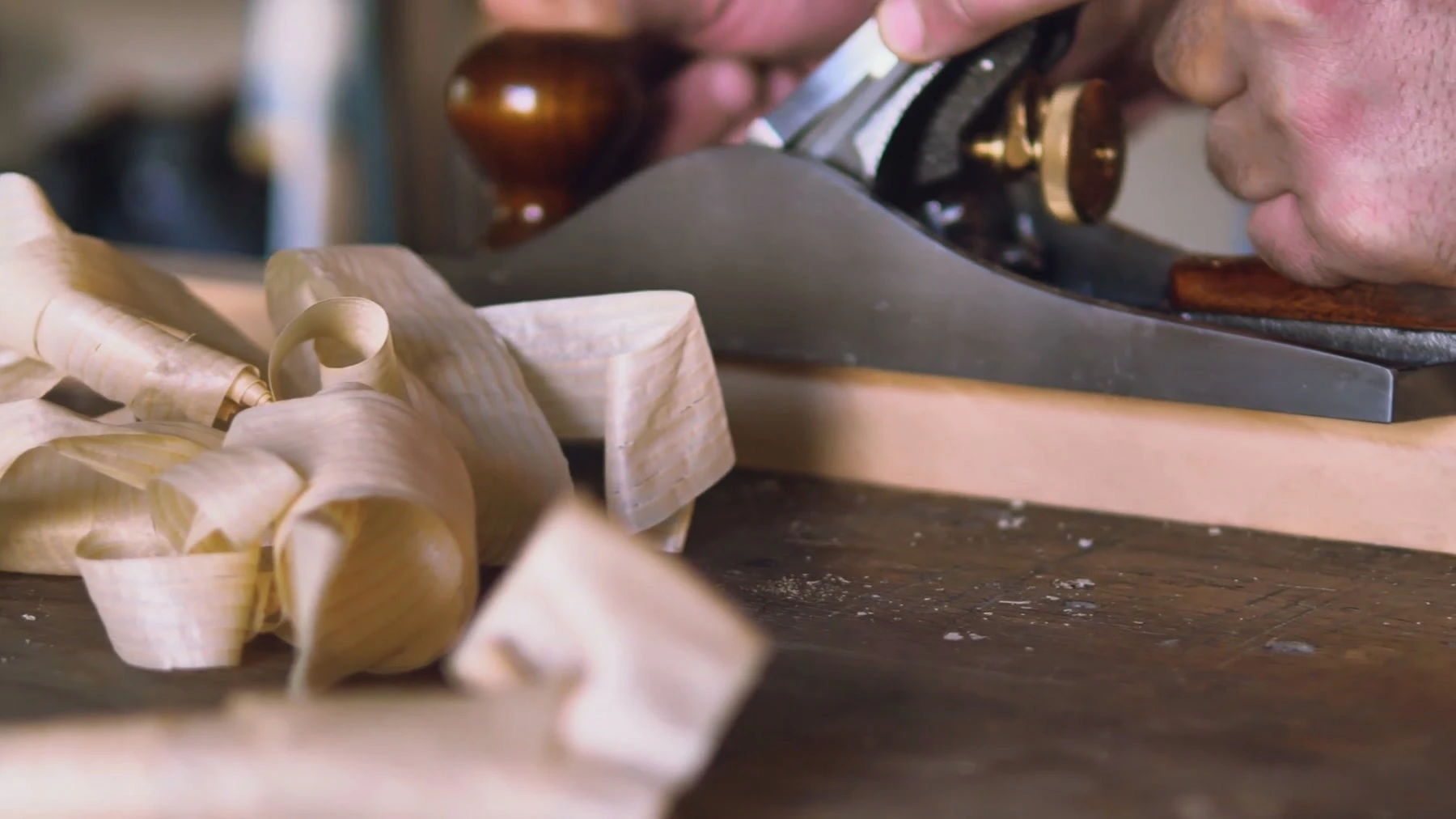
We flatten it by machine, then by hand, until the surface is completely flat. The final step before the resin goes in.
-
 VI
VIBuilding the mould
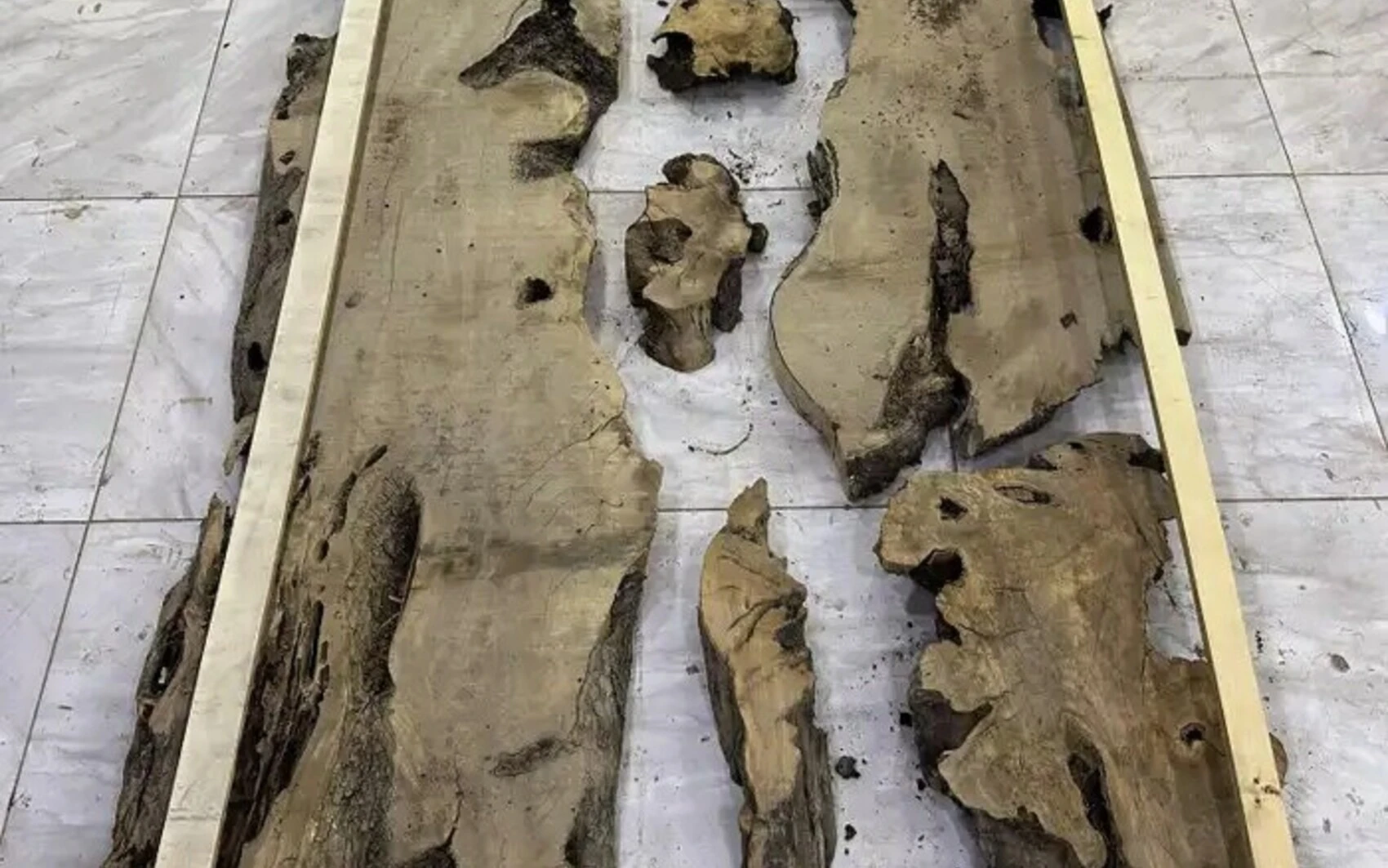
A precise mould is built around the slab and every joint is sealed. Care at this stage controls the edge, protects the timber and keeps the pour exactly where it belongs.
-
 VII
VIICasting the resin
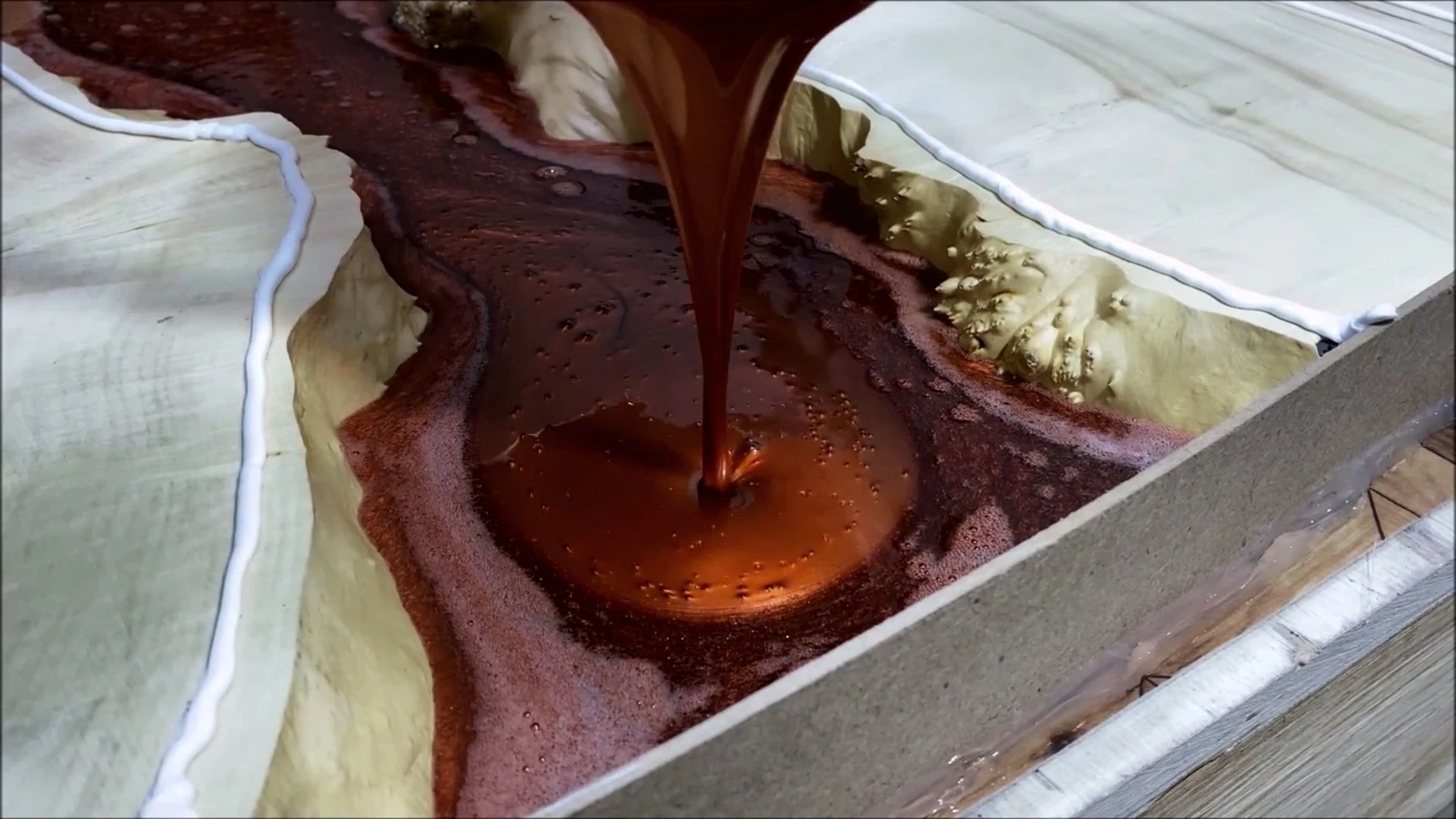
The resin is mixed, coloured and poured as one continuous process. Temperature, timing and pigment are controlled so the colour cures with depth and clarity.
-
 VIII
VIIIFinishing
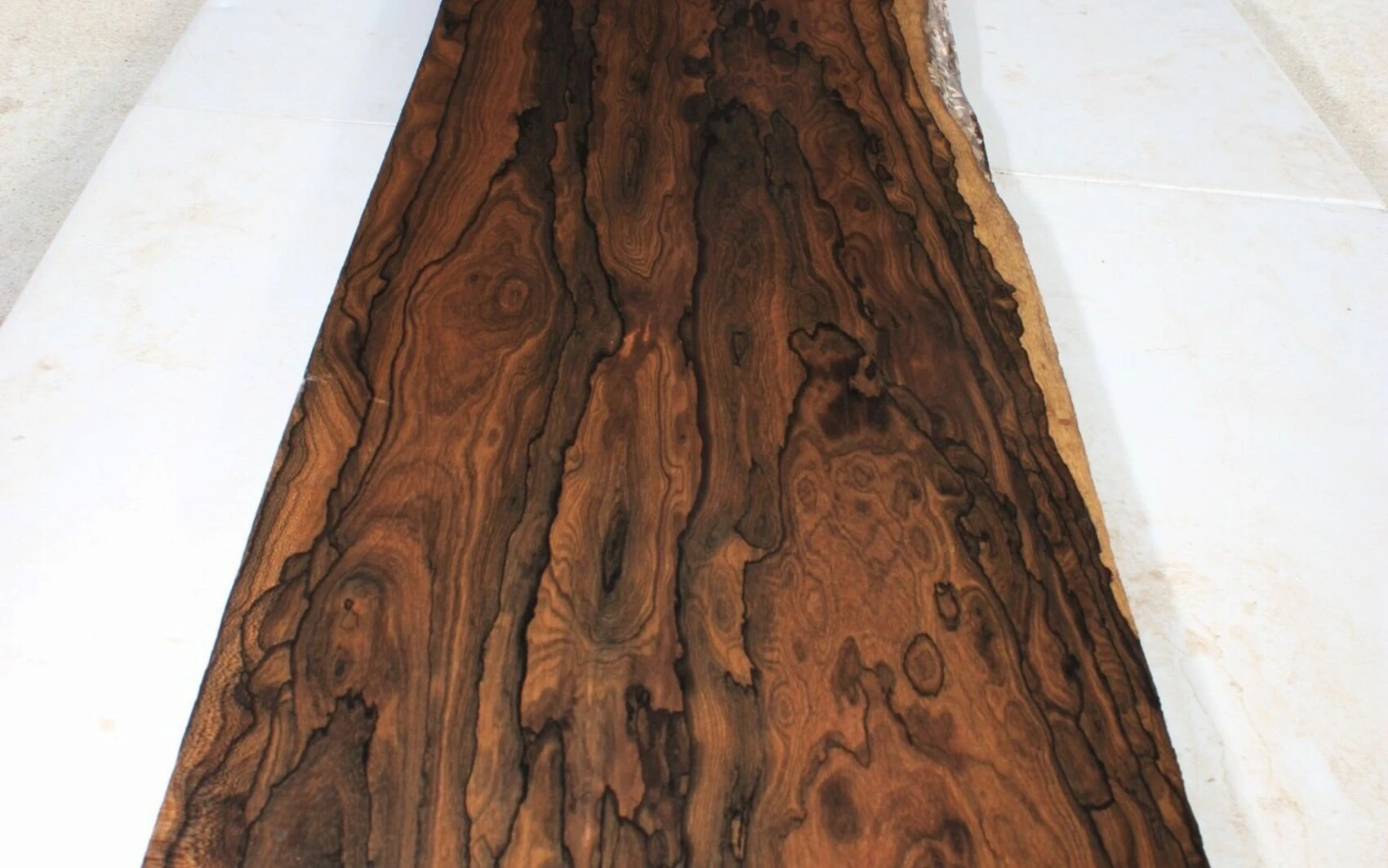
We flatten the surface, sand it in progressively finer stages and protect it with durable clear lacquer. The join between wood and resin must feel completely smooth.
-
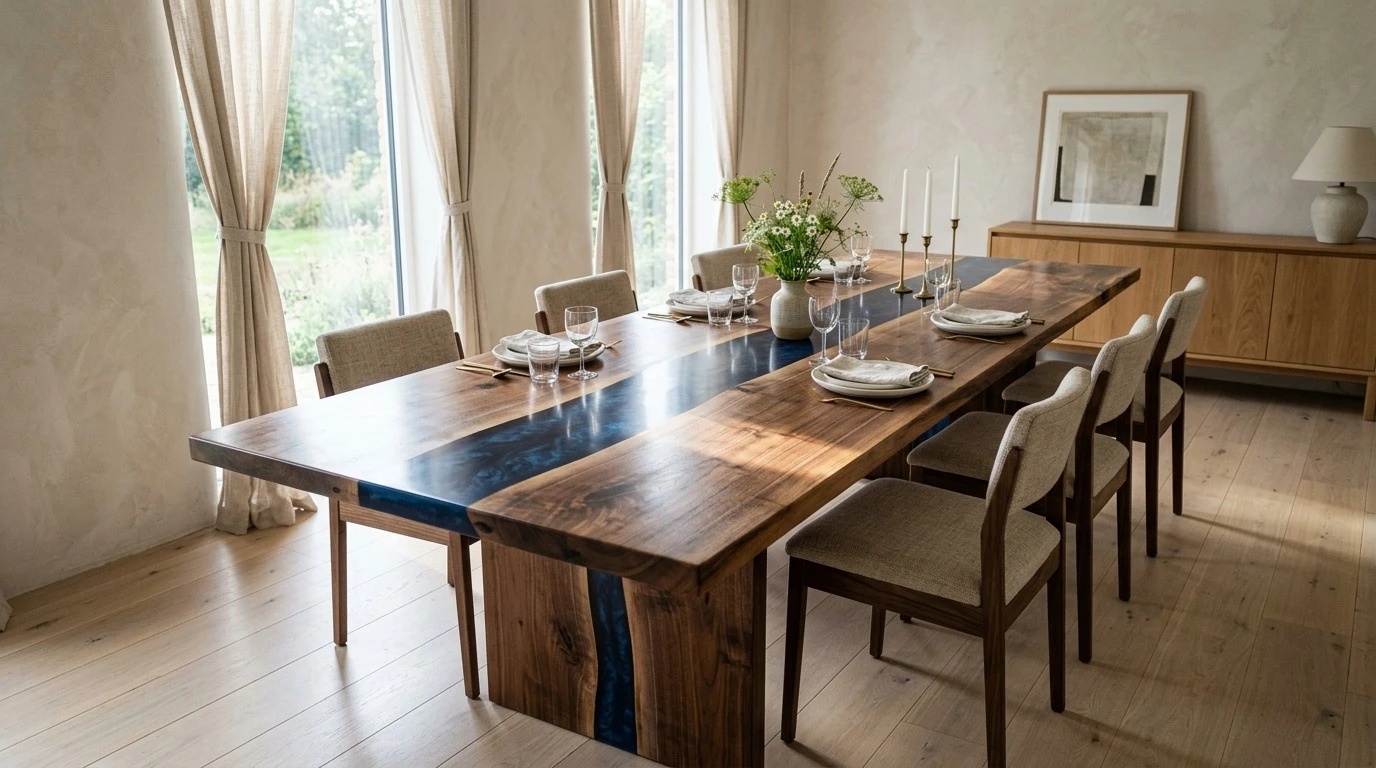 IX
IXInstallation
The finished piece is protected for transport, delivered by our team and carefully installed in your room.
Words
What the terms mean.
Six words worth knowing before you order anything in solid wood.
-
The tree’s natural outer edge, kept instead of cut away. No two are alike, and it’s the quickest way to tell solid wood from a factory-made panel.
-
A slab is split and opened like a book, so the left and right sides mirror each other. Used for wide surfaces and doors.
-
A lump where the grain has grown in on itself, giving a tight swirling pattern. Rare, hard to work, and the best part of any tree.
-
A surface that changes tone and colour as you walk past it. The colour isn’t changing. The grain and the way it bends light create the effect.
-
The thin black lines through pale wood, drawn by fungus and stopped when the wood was dried.
-
Small splits that can open while timber loses moisture. They are common in solid wood and are assessed before a slab is selected.
Straight answers
What people ask us.
The questions that come up in nearly every conversation.
-
We use UV-stabilised casting resin and control the cure carefully to minimise discolouration. As with any material, very strong direct sunlight should be considered when choosing placement and colour.
-
Yes. Once fully cured, the sealed surface is suitable for everyday dining. Use a cutting board for food preparation and wipe the table with a soft damp cloth.
-
Use a trivet. High heat can damage the finish or leave a dull mark on resin surfaces.
-
Proper seasoning and a controlled, low-temperature pour greatly reduce movement. We assess every slab before casting and design around the way solid wood naturally behaves.
-
Scratches and signs of use aren’t permanent. Our finish lets us restore the surface completely, under warranty.
-
The surface is durable and easy to clean. Detailed care instructions come with delivery.